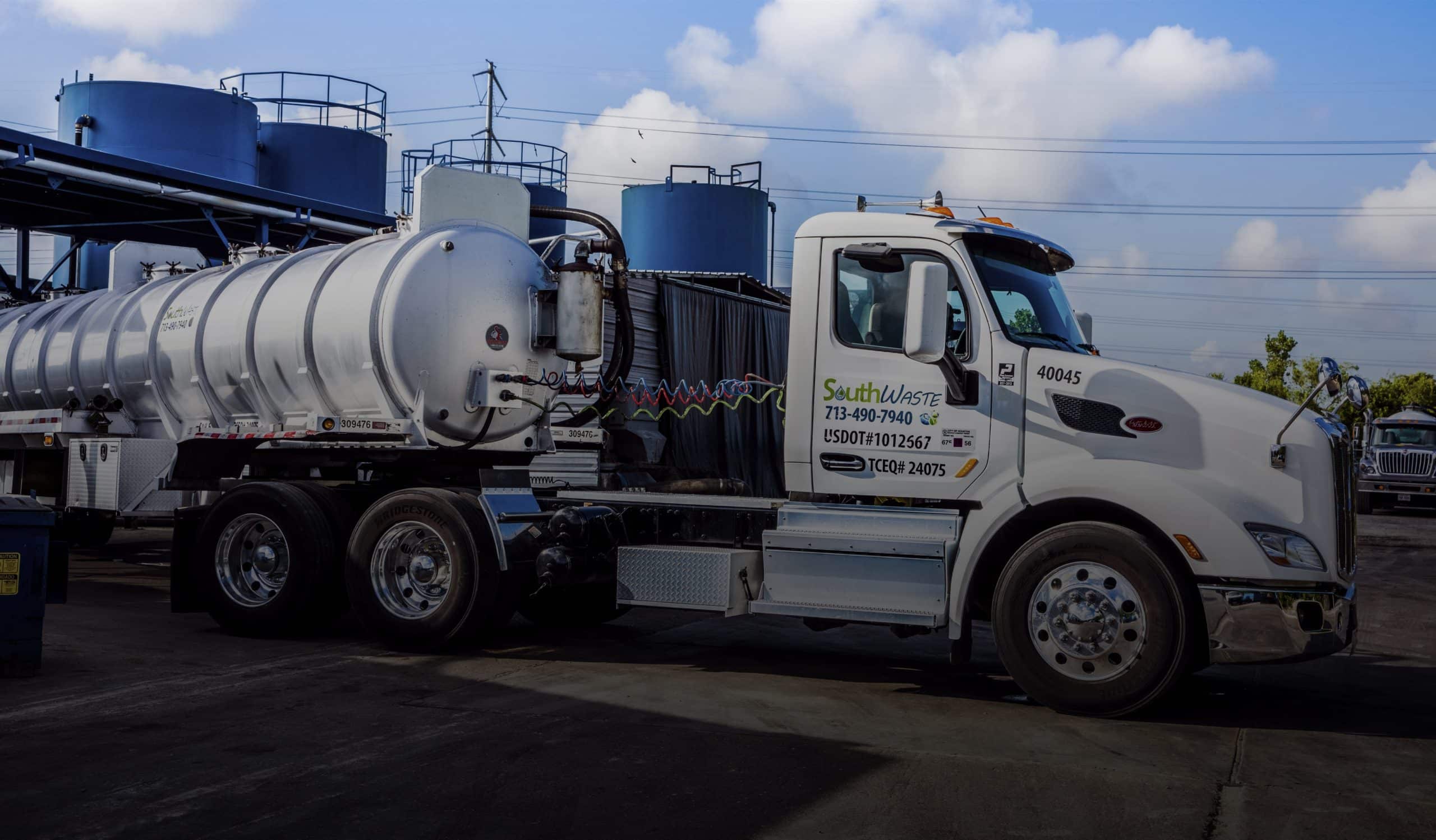
If you manage a commercial property, run an industrial facility, or work in construction, you’ve likely encountered situations where liquid waste, sludge, or accumulated debris needs to come out of a pit, tank, or sewer line — and conventional equipment just won’t reach it. That’s where vacuum trucks come in.
This guide covers what a vacuum truck is, how the different types work, what vac truck services typically include, and how to decide when professional vacuum truck service is the right call.
What Is a Vacuum Truck?
A vacuum truck is a specialized industrial vehicle equipped with a large-capacity sealed tank, a high-powered vacuum pump, and a system of hoses that allows operators to suction liquids, sludges, slurries, and semi-solid materials from a wide range of locations and transfer them to the tank for transport.
The core mechanical principle is straightforward: the truck’s pump creates a partial vacuum inside the sealed tank, generating differential pressure between the atmosphere and the tank interior. When the inlet hose is placed near liquid or slurry material, atmospheric pressure pushes material up the hose into the tank. Depending on the pump type, vacuum trucks can lift material from significant depths — including below-grade sumps, underground tanks, and deep manhole structures.
Vacuum trucks are also called vac trucks, industrial vacuum trucks, or vacuum tanker trucks depending on the application and region. They are purpose-built for industrial and municipal liquid waste work, and they are operated by licensed professionals who handle not just the vacuuming but the licensed transport and disposal of what they collect.
Types of Vacuum Trucks
Not every vacuum truck is the same. The right equipment depends on the material being removed, site conditions, and the specific application.
Wet/dry vacuum trucks: The most common type of industrial vacuum truck, wet/dry units are designed to handle both liquid waste and semi-solid material — sludge, slurry, wet sand, grit, and similar mixtures. These are the workhorses of industrial cleaning, sewer maintenance, and catch basin service.
Combination sewer cleaning trucks: Also called combination trucks or jetter-vac units, these are purpose-built for sewer line cleaning. A high-pressure water jetter clears blockages and flushes debris down the line, while the vacuum system recovers the waste material from downstream manholes or access points. These are standard equipment for municipal sewer maintenance programs.
Industrial vacuum tanker trucks: Large-capacity vacuum tankers are designed for high-volume liquid waste collection — produced water handling, industrial process wastewater, bulk liquid transfer, and similar large-scale applications. Vacuum tanker trucks typically have larger tank capacities than standard vac trucks and are configured for predominantly liquid material rather than solid-laden slurry.
What Vac Truck Services Cover
Vacuum truck services span a wide range of industrial, commercial, and municipal applications:
Liquid waste removal: Industrial facilities, food processors, car washes, and manufacturing plants generate liquid waste streams — wastewater, process effluent, sump contents — that need to be periodically pumped out and hauled to a licensed disposal or treatment facility. Routine vac truck service keeps these waste streams managed and prevents overflow or regulatory violations.
Sewer cleaning and maintenance: Grease accumulation, root intrusion, debris buildup, and sediment settling are the main causes of sewer line blockage and capacity loss. Combination vacuum trucks can clean mainlines, laterals, and service connections, restoring flow capacity and extending the useful life of sewer infrastructure.
Catch basin and storm drain cleanout: Catch basins collect sediment, litter, and organic material over time. Without regular cleanout, they lose capacity, back up during storm events, and allow pollutants to enter the stormwater system. Vacuum truck services can clean catch basins quickly across large commercial properties and municipal systems.
Lift station pumping and wet well cleaning: Sewage lift stations need periodic wet well cleaning in addition to routine pump maintenance. Accumulated grit, rags, and settled solids reduce pump efficiency and create maintenance problems. Vacuum truck service removes accumulated material, leaving the wet well clean for inspection and service.
Pit and tank cleaning: Oil-water separators, clarifiers, equalization basins, above-ground storage tanks, and underground storage tanks accumulate sludge, solids, and residual material over time. Industrial vacuum trucks with appropriate hose configurations and pumping capacity can evacuate these structures completely and prepare them for inspection, maintenance, or decommissioning.
Spill response: When a liquid release occurs — fuel, chemicals, process water, sewage — vacuum trucks can be rapidly deployed to recover spilled material before it migrates. Fast response reduces environmental impact, regulatory exposure, and remediation costs.
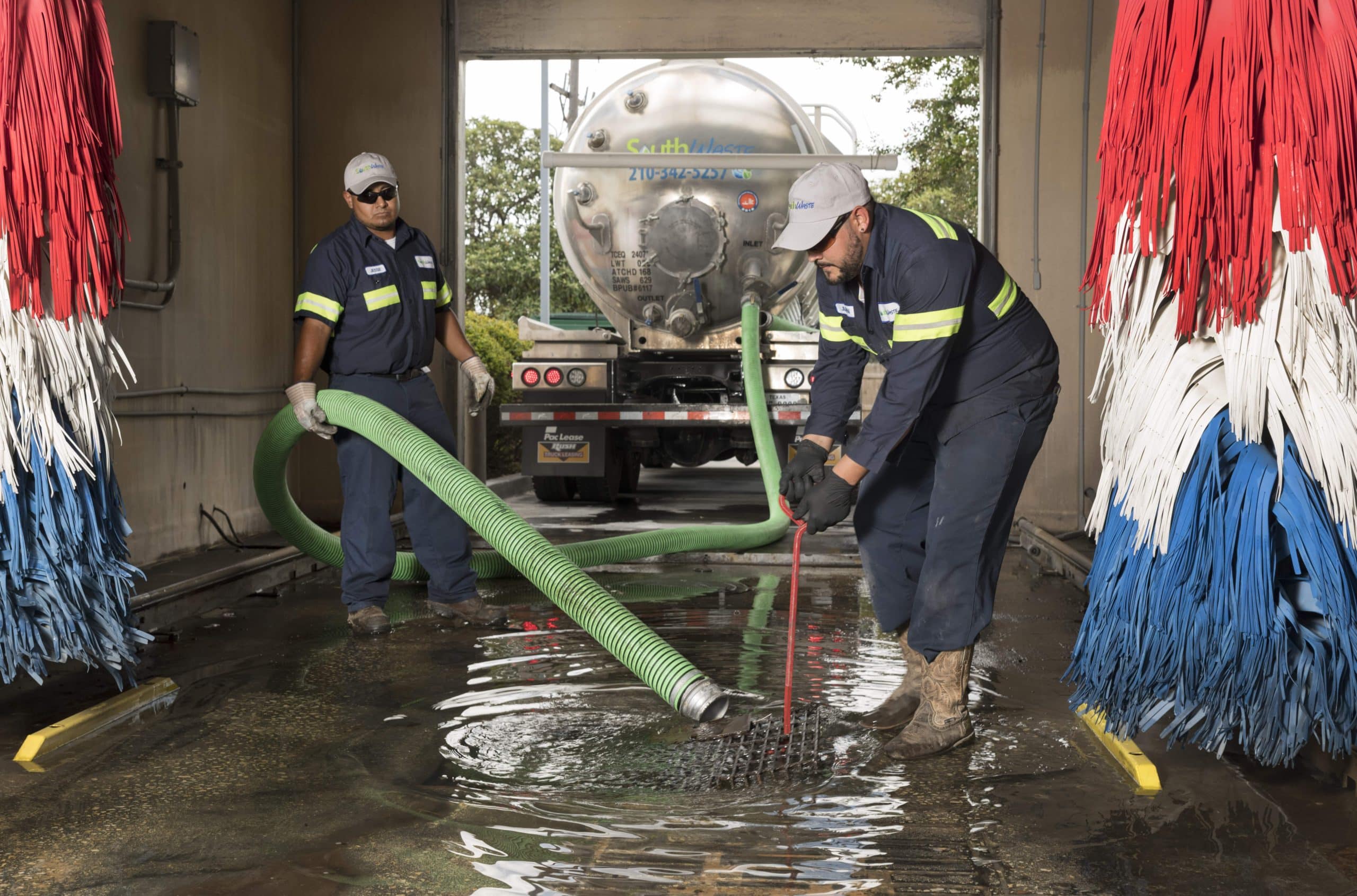
How Vac Truck Service Works: The Process
Understanding what to expect from a vacuum truck service call helps you plan access, minimize downtime, and get the most out of each visit.
- Pre-service coordination. You’ll confirm the material type, volume estimate, access conditions, and any required permits or site safety procedures. For regulated waste streams, this is also when manifesting and disposal documentation gets set up.
- On-site setup. The vac truck is positioned near the access point — manhole, pit opening, tank hatch, basin inlet. Operators deploy hose to reach the collection point, which may be 20, 50, or 100+ feet away depending on the truck’s configuration and site geometry.
- The vacuum pump engages and material is drawn up through the hose into the truck’s sealed tank. Operators monitor pump performance, manage hose positioning, and control intake rate. For sewer cleaning, the jetter runs simultaneously to mobilize debris toward the vacuum hose.
- Completion and documentation. When the collection point is clean or the truck’s tank is full, the hose is cleared and the access point is restored. The driver completes disposal manifests or waste transport documentation as required by the applicable state environmental agency.
- Material is transported to a licensed receiving facility — a wastewater treatment plant, industrial waste processor, or permitted disposal site depending on the material type. A copy of the disposal documentation can be provided to the generator for compliance records.
When to Call a Vacuum Truck Company vs. Handling It In-House
Small-volume liquid removal — emptying a floor drain sump with a submersible pump, for example — is often manageable with in-house equipment. But several situations clearly warrant a licensed vacuum truck service:
- The material is regulated as liquid industrial waste, and transport requires a licensed hauler
- The volume or depth exceeds what portable equipment can handle
- The access point is a confined space (manholes, underground tanks) that requires specialized entry procedures
- The work involves sewer lines, lift stations, or municipal infrastructure that requires permitted operators
- A spill or release needs immediate response and containment
- The material involves petroleum products, food processing waste, or other streams with specific disposal requirements
When in doubt, the cost of a professional vac truck service call is almost always lower than the cost of a regulatory issue, an equipment failure, or a worker safety incident from attempting the work in-house with inadequate tools.
What to Look for in a Licensed Vacuum Truck Service Provider
Not all vac truck companies are equal. Before you schedule service, verify:
- Active hauler license in your state. Liquid waste transport requires state-specific licensing from environmental agencies (TCEQ in Texas, FDEP in Florida, etc.). Ask for license numbers and verify them.
- Compliant disposal facilities. Where does the material go? A legitimate vac truck company can name the receiving facility and provide disposal documentation.
- Adequate insurance. Industrial vacuum truck service should include commercial general liability and pollution liability coverage appropriate for the material types being handled.
- Equipment match for your application. A company equipped primarily for residential septic service may not have the industrial vacuum truck capacity or hose configuration for a large industrial pit cleaning job.
- Response capability. If your facility needs emergency response capability — not just scheduled service — confirm the provider can actually mobilize within your required window.
Frequently Asked Questions
How much does vacuum truck service cost?
Pricing depends on material type, volume, location, required disposal facility, and service complexity. Most industrial vac truck service is quoted per job or per truckload with a disposal fee separate from the transport charge. Contact SouthWaste at 866-413-9494 for a project-specific quote — pricing varies significantly by market and material.
How do I schedule vac truck service?
Call SouthWaste at 866-413-9494 or submit a service request online. Be ready to describe the material type, approximate volume or location (pit depth, tank size, sewer line length), access conditions, and your preferred service window. We’ll confirm equipment availability and provide scheduling options.
What materials can a vacuum truck remove?
Industrial vacuum trucks can handle a wide range of materials: liquid wastewater, sludges and slurries, fats and oils, grit and sand, catch basin sediment, sewage, process effluent, hydrocarbon-impacted water, drilling mud, and semi-solid organic waste. Some hazardous waste streams require additional permitting and specialized equipment—describe your material when requesting service, and we’ll confirm suitability.
Are vacuum trucks regulated?
Yes. Liquid waste transport is regulated at both the state and federal level. Vacuum truck operators must hold liquid waste hauler licenses from the applicable state environmental agency, and disposal must occur at permitted receiving facilities. EPA regulations govern certain waste streams regardless of state. SouthWaste operates in full compliance with applicable licensing requirements in every market we serve.
For professional vacuum truck services across Texas, Florida, Louisiana, Georgia, Illinois, California, Tennessee, and Wisconsin, contact SouthWaste at 866-413-9494 or visit our Vacuum Truck Services page to learn more and request service.