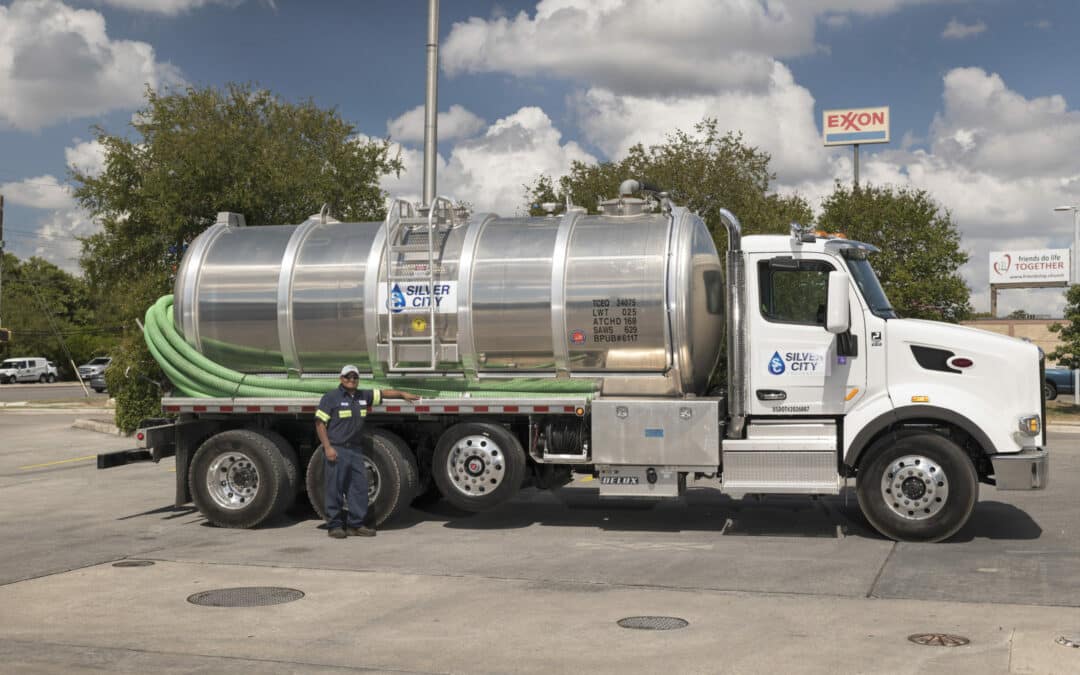
Searching for a vacuum truck near me usually means something already went wrong. A lift station is backing up, a catch basin is overflowing, or a sump is full. You need it emptied now, and you need it done legally.
Our customer service team at Southwaste Disposal takes these calls every day. One worry comes up again and again: is this company actually allowed to haul my waste? This guide shares what we tell callers. You will learn what to ask, how licensing works in each state, and which warning signs should send you elsewhere.
Key Takeaways
- Haulers need a license in every state where they collect waste. A Texas license does not cover Florida.
- Ask for the license number and the agency that issued it before you book.
- Your hauler should name the disposal facility and give you manifests.
- Pollution liability insurance matters. General liability usually will not cover a spill.
- An unusually low quote can signal illegal dumping, and you share the liability.
- Rules differ by state and waste type, so confirm with the state agency.
What Does a Vacuum Truck Do?
A vacuum truck uses a powerful pump and a sealed tank to pull liquids, sludge, and slurry out of hard-to-reach places. Crews use these trucks for sewer cleaning, catch basin cleanouts, lift station pumping, sump and pit cleaning, and industrial liquid waste removal.
Some jobs need more than a basic tank truck. A large pit cleaning requires serious suction and hose reach. Combination sewer cleaning adds high-pressure water. Tell us about your site, and we will match the equipment to the work.
Why “Vacuum Truck Near Me” Means More Than Distance
Distance changes more than your wait time. Three things shift when the truck is local.
Disposal Rules Change by State
The facility that accepts your waste must hold a permit in the state where it operates. A hauler from another state may lack the disposal contracts to deliver waste legally here. When you hire a local vacuum truck company, you also get access to compliant local disposal.
Licenses Do Not Cross State Lines
Each state licenses haulers on its own terms. A company licensed in Texas has no automatic right to haul in Florida or Louisiana. Ask for proof that covers the state where your site sits.
Emergencies Need a Short Drive
A spill, a lift station backup, or a sump overflow cannot wait. A nearby crew mobilizes faster. That speed often matters more than a lower mobilization fee.
Five Questions to Ask Before You Book
Ask every company these questions. We hear them often, and you should expect clear answers.
1. Are you licensed to haul liquid waste in my state?
This one is non-negotiable. Ask for the license number and the agency that issued it. If the company dodges the question, move on.
2. Where does my waste go?
A real hauler names the receiving facility, such as a treatment plant or a permitted processor. They can also show you the paperwork. Vague answers suggest improper disposal.
3. Do you carry pollution liability insurance?
General liability coverage usually excludes pollution incidents. Work near utilities, kitchens, or industrial sites carries real environmental risk. You want coverage that fits that risk.
4. Does your equipment fit my job?
Crews that mostly serve residential septic systems often lack the capacity for industrial pits or combination sewer cleaning. Describe your job in detail, then ask them to confirm they can handle it.
5. Will I get disposal manifests?
For regulated waste, you need proof of lawful disposal. Any legitimate industrial vacuum truck company provides manifests as routine.
State Licensing: What We Tell Callers in Each Market
Rules differ by state, by waste type, and sometimes by city. The summaries below come from state agency sources. Confirm current requirements with the agency before you hire anyone, and check your local sewer district for added rules. This guide is general information, not legal advice.
Texas
The Texas Commission on Environmental Quality (TCEQ) runs the Sludge Transporter Registration Program under 30 TAC Chapter 312, Subchapter G. It covers grease trap waste, grit trap waste, septage, and sewage sludge. Only registered transporters may legally pump and haul those wastes. Other industrial waste streams can fall under different TCEQ rules, so tell us what you have. Southwaste Disposal holds TCEQ registration for our Texas markets: Houston, Dallas-Fort Worth, San Antonio, and Austin.
Florida
The Florida Department of Environmental Protection (DEP) licenses grease waste haulers under Section 403.0741, Florida Statutes, and Chapter 62-705 of the Florida Administrative Code. Other waste streams can fall under different Florida programs. Southwaste Disposal operates under the applicable Florida DEP permits in Jacksonville, Miami, Orlando, and Tampa.
Louisiana
The Louisiana Department of Environmental Quality (LDEQ) regulates several waste categories. Sewage sludge and septage transporters register annually under LAC 33:IX.7301. Solid waste transporters file a notification under LAC 33:VII. Which rule applies depends on your waste, so ask your hauler to name it. We serve New Orleans, Baton Rouge, and Lafayette.
Georgia
Georgia’s Environmental Protection Division (EPD) requires commercial grease transporters to register and hold a FOG number. The Department of Public Health certifies septic tank pumpers under Chapter 511-3-1. Many cities and counties also require you to use a registered hauler. We serve the Atlanta and Smyrna area.
Illinois
The Illinois EPA permits haulers of nonhazardous special waste under 35 IAC Part 809. That category includes industrial process waste. Haulers who carry only septic tank pumpings can hold a license under the Private Sewage Disposal Licensing Act instead. Chicago-area sewer districts and the city may add their own rules. We serve the Chicago area.
California
California Health and Safety Code sections 117400 to 117450 govern liquid waste hauling. Haulers typically need a permit from the local enforcement agency, usually county environmental health. State and regional water boards set separate rules for discharge and disposal. We serve San Diego and the Santa Ana and Los Angeles area.
Tennessee, Wisconsin, Alabama, Mississippi, Indiana, and Michigan
We serve these six states without a local hub. Timing and coverage depend on your site, so call us and we will tell you plainly what to expect. Here is how each state handles hauler oversight.
- Tennessee: The Tennessee Department of Environment and Conservation (TDEC) oversees waste and wastewater programs, and your local utility sets its own grease rules. Confirm both before you book. We serve the Chattanooga area.
- Wisconsin: The Department of Natural Resources licenses septage businesses under Chapter NR 113. That chapter covers septic tank waste, holding tank waste, and sanitary grease interceptor waste. It does not cover industrial liquid waste. We serve the Milwaukee area.
- Alabama: Rule 420-3-6-.23 of the Alabama Department of Public Health requires a sewage tank pumping permit from the local health department. The rule covers septage and grease trap waste.
- Mississippi: The Mississippi State Department of Health licenses septic tank cleaners and haulers. Ask the department and your city which rules cover grease trap waste.
- Indiana: The Indiana Department of Environmental Management (IDEM) requires a septage management business permit under IC 13-18-12 and 327 IAC 7.1. The program includes restaurant grease from traps and interceptors.
- Michigan: The Department of Environment, Great Lakes, and Energy (EGLE) issues the Liquid Industrial By-Products credential under Part 121 of the Natural Resources and Environmental Protection Act. Transporters carry that credential in every vehicle.
Federal Rules
Some waste streams fall under the federal Resource Conservation and Recovery Act (RCRA) regardless of state rules. That includes hazardous waste and some petroleum-impacted material. Haulers must follow EPA manifest requirements, and you share responsibility for hiring a qualified hauler. When you call, we identify your waste classification and set up the service to match.
Red Flags When Comparing Vacuum Truck Companies
These warning signs tell us a company may not be the right choice.
- No license number. Every licensed hauler can share one on request.
- A price that looks too good. Legal disposal costs money. A quote far below the rest may mean the load gets dumped illegally, and you carry liability as the waste generator.
- No mention of manifests. If nobody explains where your waste goes, assume the worst.
- An out-of-state truck with no local presence. It probably lacks local registration and disposal relationships.
- No insurance certificate. A professional hauler provides proof of coverage on request.
Where Southwaste Disposal Provides Vacuum Truck Service
We run local hubs in these markets. Each one handles sewer cleaning, lift station service, catch basin cleanout, and industrial liquid waste removal.
- Texas: Houston, Dallas-Fort Worth, San Antonio, and Austin
- Florida: Jacksonville, Miami, Orlando, and Tampa
- Louisiana: New Orleans, Baton Rouge, and Lafayette
- Georgia: Atlanta and Smyrna
- Illinois: Chicago
- California: San Diego and Santa Ana (Los Angeles area)
We also serve Tennessee, Wisconsin, Alabama, Mississippi, Indiana, and Michigan without a local hub. See all locations on our service areas page.
How to Schedule Vacuum Truck Service
Scheduling takes one call. Have these details ready, and we can route the right crew faster.
- Your location. Tell us the city and state.
- The work. Describe what needs to come out: liquid waste, sludge, a sewer line, a catch basin, or a lift station.
- Access. Mention road access, gate requirements, confined space entry, and the distance from the truck to the collection point.
- Timing. Say whether this is scheduled maintenance, a project with a start date, or an emergency.
Call Southwaste Disposal at 866-413-9494. We take scheduled service requests and emergency calls. You can also request service online or read more on our vacuum truck services page.
Need related help? Our team also handles lift station maintenance and hydro-jetting. Whatever the job, we will tell you what licensing and documentation you will get before the truck rolls.